 English
  Português do Brasil
  Español
  简体中文
简体中文 
Biodiesel represents an important alternative to traditional diesel and has gained prominence in recent years as a renewable and more sustainable energy source. With the increase in demand for clean fuels, the search for alternative raw materials has grown exponentially. In this context, corn and wheat emerge as viable options for the production of biodiesel, opening up new possibilities for the agricultural and industrial sectors.
Brazil is recognized worldwide for its renewable energy matrix, and biodiesel is one of the pillars of this recognition.
Biodiesel in Brazil:
- Production: Brazil is one of the largest producers of biodiesel in the world. In 2019, the country produced more than 5.9 billion liters of biodiesel.
- Raw materials: Soybeans represent the main raw material for biodiesel production in Brazil, accounting for approximately 70% of production. Other sources include beef tallow, chicken fat and palm oil.
- National Program for the Production and Use of Biodiesel (PNPB): Launched in 2004, this program has allowed a significant increase in the production and use of biodiesel in the country, with the goal of incorporating biodiesel into conventional diesel.
- Mixture: Since March 2020, the mandatory blend of biodiesel in diesel sold to the final consumer is 12% (B12). However, the government has goals to increase this percentage in the coming years.
Biofuels in Brazil:
- Ethanol: Brazil is the second largest ethanol producer in the world, behind only the United States. Sugarcane is the main raw material, responsible for more than 90% of the country's ethanol production.
- Corn ethanol: With the expansion of corn production, especially in the Central-West, corn ethanol has gained relevance. Some states, such as Mato Grosso, have invested significantly in this type of production.
- RenovaBio: Launched in 2017, the RenovaBio program aims to promote the expansion of the production and use of biofuels in Brazil, reducing greenhouse gas emissions.
Challenges and Perspectives: With the growing demand for renewable energy sources and the need to reduce carbon emissions, Brazil is well positioned to lead the transition to a cleaner energy matrix. The production of biodiesel and other biofuels is expected to grow further in the coming decades, with investments in technology, research and infrastructure.
For more up-to-date and specific statistics, I recommend consulting official sources such as the ANP (National Agency of Petroleum, Natural Gas and Biofuels) or the Ministry of Mines and Energy, which regularly publish reports and data on the production and consumption of biofuels in Brazil.
Corn and Wheat: From the Field to Biodiesel Production
The production of biodiesel from corn and wheat is an innovative process that uses the oils and fats from these grains. Both cereals, traditionally used in human and animal food, have the potential to be transformed into biofuels.
Corn: One of the world's most important agricultural crops, corn can be used to produce ethanol, a well-known biofuel. Recent research has also demonstrated its potential for producing biodiesel, using the oils present in the grain.
Wheat: Although less common than corn in the production of biofuels, wheat also has potential for the production of biodiesel, especially from the use of residues from the milling process.
Idugel Group: Innovation and Efficiency in the Process
The Idugel Group, with its vast experience in industrial solutions, plays a crucial role in optimizing the process of obtaining biodiesel from corn and wheat. The solutions offered by the company guarantee maximum efficiency in milling, sieving and filtering, fundamental steps for extracting oils and fats from grains.
- Grinding and Sieving: With state-of-the-art equipment, the Idugel Group guarantees precise grinding, resulting in a high-quality product. Proper sieving allows the grain components to be separated effectively, facilitating the extraction of oils.
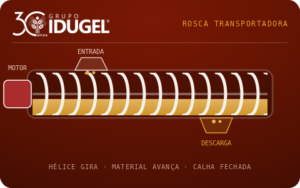
- Transport, Dosing and Filtration: Efficient transfer and correct dosing of materials are crucial for biodiesel production. In addition, proper filtration ensures that only the purest oils are used in the process, ensuring high-quality biodiesel.
The Idugel Group's continuous investment in research and development ensures that the solutions offered are always the most up-to-date on the market, meeting the specific demands of the biodiesel industry.
Biodiesel, as an alternative to fossil diesel, is essential for building a more sustainable future. Corn and wheat, as viable raw materials, represent an opportunity to diversify production sources and promote more integrated agriculture. With the support of advanced technologies and solutions, such as those offered by the Idugel Group, the production of biodiesel from these grains becomes not only possible, but also efficient and of high quality. The future of biodiesel undoubtedly depends on innovation and the ability to explore new frontiers, and companies like the Idugel Group are at the forefront of this transformation.
Alternatives: Corn and Wheat Ethanol: New Perspectives and Energy Efficiency
As the world seeks cleaner and more sustainable energy sources, ethanol is emerging as a highly relevant biofuel, especially ethanol produced from corn and wheat. These grains, which are widely cultivated and have a significant presence in the global diet, are also potential sources for generating renewable energy.
O corn ethanol, widely produced in various parts of the world, especially in the United States, has proven to be a viable alternative to ethanol produced from sugarcane. Its production process involves the fermentation of sugars present in corn, resulting in a biofuel that can be used in vehicles and industries, reducing the emission of polluting gases. In addition, the byproduct of this process, DDGS (Distillers Dried Grains with Solubles), can be used as animal feed, demonstrating the efficiency and full use of the grain.
In turn, the wheat ethanol is still in the exploration and research phase, with the first plant being installed, but it has already shown promising results in European countries. When wheat is processed, it produces starch, which can be converted into fermentable sugars. These sugars, once fermented, give rise to ethanol. The production of ethanol from wheat could therefore represent a new frontier in the diversification of biofuel sources, expanding the options available on the global market.
Within this scenario, the Idugel Group plays a key role in providing equipment and solutions that optimize the ethanol production process, both from corn and wheat. Precise grinding and proper screening are crucial to maximizing ethanol yield. In addition, with a robust transportation, dosing and filtration infrastructure, it is possible to ensure efficiency at all stages, from grain harvesting to its transformation into biofuel.
In conclusion, ethanol produced from corn and wheat represents an emerging energy alternative with the potential to transform the biofuels landscape. With the support of advanced technologies and leading companies such as the Idugel Group, this journey towards a more sustainable energy matrix becomes increasingly concrete and viable.