 English
  Português do Brasil
  Español
  简体中文
简体中文 
Cereal rolling mills are essential machines in grain processing, responsible for rolling or flaking cereals. These equipments ensure the quality and efficiency of the final product. In this post, we will discuss the different types of rolling mills offered by Idugel Group, one of the main Brazilian manufacturers of cereal processing equipment.
These machines are designed to process grains through rolling, which consists of passing them between two rotating cylinders at an adjustable distance and speed, in order to compress and increase the surface area of the product. These machines are widely used in the food industry, mainly in the processing of cereals, such as wheat, corn, rice and oats, for the production of flours, flakes and other derivatives. In addition, rolling mills are also used in sectors such as animal feed and in the production of biofuels. Rolling cereals is a crucial step in ensuring the quality, texture and nutritional properties of the final products, in addition to improving the water absorption and digestibility of the final product.
Cereal Rolling Mills: Corn, Oat, Rice Industry:
Rolling oats, corn and rice is an important process in the cereal and grain industry as it improves the digestibility and quality of the final products. Let’s look at each of these grains and how rolling affects their properties:
- Oat Flocking: Oat rolling usually occurs after the hulls have been removed and the grains have been heat-treated. The hulled oats are then subjected to a moistening step, followed by steaming to soften the grain. The oat grains are then rolled between rollers to produce oat flakes. Oat flakes are widely used as a main ingredient in breakfast cereals, granola bars, and other food products.
- Corn Flocking: Corn rolling involves passing corn kernels between two rollers that apply enough pressure to flatten the kernels. This results in corn flakes, commonly used in the production of breakfast cereals and in various culinary recipes. Rolling is also used in the manufacture of products such as corn flakes.
- Rice Flocking: Rice rolling is a process in which rice grains are flattened between two rollers under controlled pressure. Rice rolling results in rice flakes that are used in a variety of food products, such as breakfast cereals, rice bars, and cooked dishes. Rolled rice can also be used as an ingredient in gluten-free products, providing a healthier alternative to other grains.
Rolling these grains offers several benefits, such as increased surface area for cooking and digestion, reduced cooking time, and the production of products with pleasant textures and flavors. In addition, rolling allows for the creation of versatile and nutritious food products that meet consumer needs.
Cereal Rolling Mills: Soybean Industry
Rolling in the soybean industry plays a key role in the processing of this grain. The process involves passing the soybeans between two adjustable rotating cylinders, which press and flatten them, altering their structure and increasing the surface area. Rolling is an important step in the production of soybean oil and soybean meal, which are widely used in the food industry and in the manufacture of animal feed.
Before rolling, soybeans undergo a cleaning and dehulling process to remove impurities and the outer husk. They are then cooked and conditioned to optimize oil extraction and improve the quality of the meal. The rolling process allows the oil to be extracted more efficiently, as the increased surface area makes it easier to rupture the cells that contain the oil.
After rolling, the soybean flakes undergo an oil extraction step to obtain crude soybean oil. The remaining soybean flakes are then processed to produce soybean meal, which is rich in protein and widely used in the manufacture of animal feed.
Rolling in the soybean industry is crucial to ensure the efficiency of the oil extraction process and the quality of the final products, such as soybean oil and soybean meal, which have a wide variety of applications in the food industry and animal nutrition.
Types of Laminators:
Rolling mills can be divided into two main types based on the drive and pressure control system used: hydraulic rolling mills and pneumatic rolling mills. Each of these types has specific characteristics that make them suitable for different applications and production needs.
- Hydraulic rolling mills: These rolling mills use hydraulic systems to apply force and control the pressure between the rolls. Hydraulic pressure is generated through the use of fluids such as oil, which are pumped into a hydraulic cylinder. The force is then transferred to the rolls by means of pistons or other mechanisms. Hydraulic rolling mills are known for their ability to provide uniform and constant pressure between the rolls, which results in a high-quality and accurate end product. Additionally, hydraulic rolling mills offer a high degree of control and adjustability, allowing operators to adjust the pressure and distance between the rolls according to the specific needs of the application.
- Pneumatic rolling mills: These mills use air pressure to apply force to the grains during the rolling process. The air pressure is adjustable, allowing greater control over the thickness and quality of the flakes produced. Pneumatic mills are ideal for applications that require a high degree of precision and control in the rolling process, and are generally lighter and more compact than hydraulic mills. However, they can be less energy efficient and achieve lower production capacities than hydraulic mills, but they offer a low initial investment and a quick payback.
When choosing between hydraulic and pneumatic rolling mills, it is important to consider factors such as desired production capacity, the type of grain to be processed, end product specifications, and energy efficiency requirements. These factors will help determine which type of rolling mill is best suited to meet the specific needs of each application.
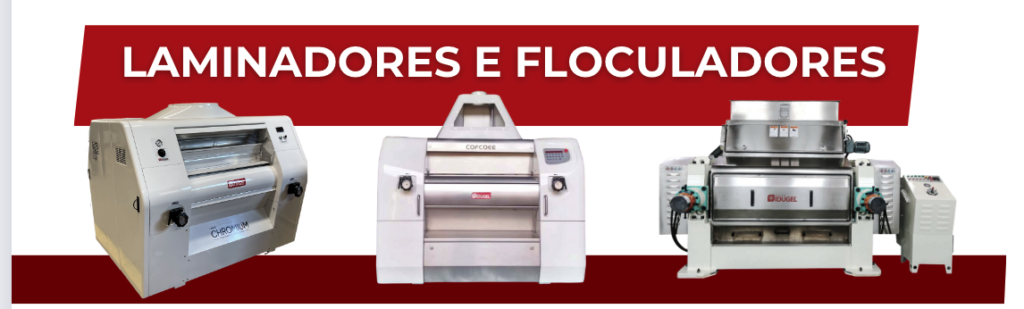
Chromium Rolling Mill Roll Bench – Pneumatic Line
O Chromium Laminator Roller Bank It is a highly efficient and durable equipment. Developed with special steel cylinders, it provides greater resistance to wear and a longer service life. The cylinder adjustment system is manual and easy to operate, ensuring the quality and uniformity of the rolled product. In addition, the products in the Chromium line have an excellent cost-benefit ratio, which allows initial investments to present a faster payback with less need for initial capital, becoming a great alternative for customers who are starting out or upgrading their industry.
Through a robust construction, with a single base block, Idugel Group rolling mills are designed for use in long-term situations that require durability with a low initial investment.
Titanium Rolling Mill Roll Bank – Automated
O Titanium Laminator Roller Bank It is a robust and efficient equipment, designed to meet the needs of cereal processing in different capacities and granulometries. The cylinders are manufactured in special steel, ensuring greater resistance to wear and a longer service life. The cylinder adjustment system can be automated and easy to operate, which facilitates the control of the rolling process. The Titanium Rolling Mill is versatile and can be used in various segments of the cereal processing industry, in addition to having a maintenance system with quick change that facilitates the processes of changing the cylinders and cleaning the feed roller.
Master Titanium Rolling Mill – High Performance Evolution
O Master Titanium Laminator is an innovative and high-performance equipment, designed to process a wide range of cereals, such as soybeans, wheat, corn, rice, oats, among others. With a compact design and robust structure, the Master Titanium is capable of operating with high capacity and efficiency. The cylinder adjustment system is automatic and precise, ensuring the quality and uniformity of the rolled product. In addition, the Master Titanium Cereal Rolling Mill has an internal cooling system that prevents the cylinders from overheating and maintains the appropriate working temperature.
The main difference of this equipment is the high installed capacity, occupying practically the same space as a conventional rolling mill.
Furthermore, by using high energy efficiency, it is possible to achieve up to 100% more capacity with an installed power only 50% greater.
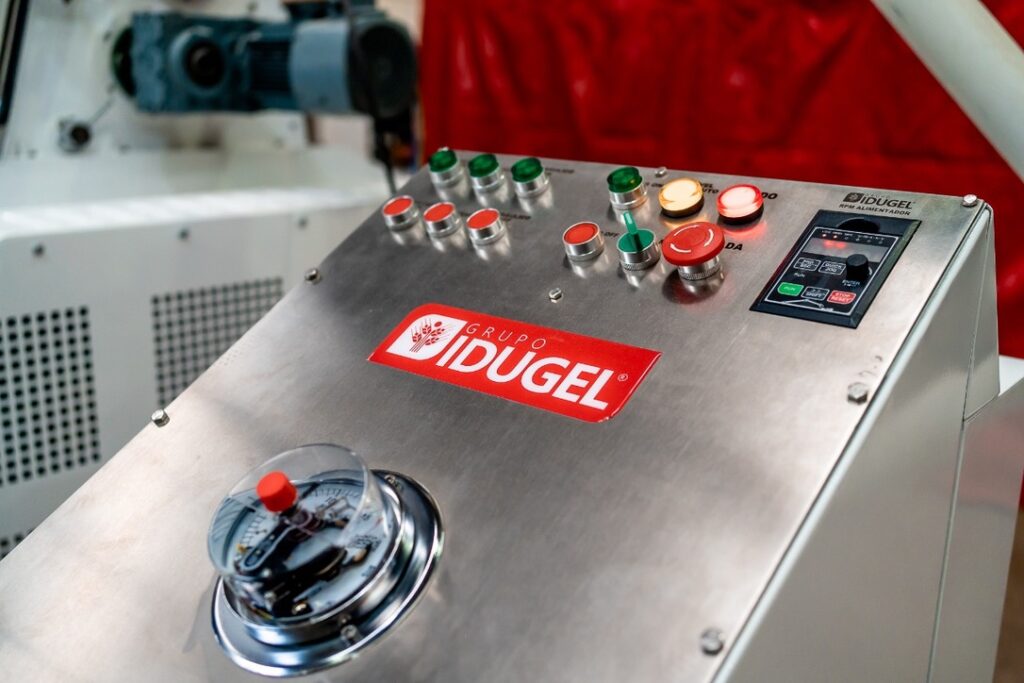
Through an easy-to-operate and highly robust system, this equipment was designed to work for several years without requiring major interventions, enabling installation in plants that work for long periods and cannot have downtime.
Differentials of the Idugel Group:
As a market leader, Idugel Group offers a range of high-quality, high-performance cereal mills that meet the specific needs of each application in the cereal processing industry. The innovation, quality and durability of Idugel Group equipment ensure efficient and reliable processing, delivering consistent results and improving the productivity of industrial operations.
By using standardized and easy-to-replace parts, all Idugel Group equipment has a stock of spare parts ready for delivery, which guarantees long periods of work without downtime and facilitates the management of spare parts and reliability of an industry that works 24 hours a day.
Upgrade your industry today and count on the best technology for cereal flocculators and laminators.